A Brief History of All Hallow’s Eve
By ANNE-MARIE EID
Big Shout Magazine, Halloween Loop Extra, October 1991
As with most major holidays, the modern celebration of Halloween bears little resemblance to its origins, having evolved into a night of partying, costuming, and trick or treating. Few holidays, however, have a stranger and more paradoxical history than Halloween.
Also known as All Hallow’s Eve, Halloween derives its name from one of the most important feasts of the Church year, observed by Roman Catholics, Anglicans, and Lutherans alike. The night of October 31 marks the eve of All Saints Day, which was designated as the first of November by Pope Gregory III sometime during the 700s. But the Church, despite itself, is often the inheritor of the taboos, superstitions, and paganism of the previous centuries. As is true in this case, it never managed to completely divorce its followers from the true genesis of Halloween, which can be traced back to the pre-Roman and pre-Celtic communities of Northern and Western Europe where Druids honored the Autumnal Equinox.
Ramona, a former Delaware resident and a follower of the Wicca tradition (“white” magic), explains the roots of this holiday. “Halloween commemorated the end of the harvest season,” she explains. “It was a time when a lot of fertility rites were performed and also a time to ask the higher powers for protection from the austerity of the upcoming winter months.”
As the Celtic year ended on October 31, the eve of Samhain (Summer’s End), the Druids celebrated a joint festival for the Sun God and the Lord of the Dead. Followers of the druidic tradition often danced in the forests, made animal sacrifices, and thanked the Goddess of Fertility for her bounty and gifts.
“Two years ago, several of us went into the woods to celebrate the end of summer in accordance with the old traditions,” Ramona says. “We drew a circle around ourselves by sprinkling sea salt and invoking the four directions (North, South, East, and West). We brought with us bouquets of roses and we burned incense and offered up the roses for all the witches who have been persecuted in the past. It was also an offering for all the women who suffer from abuse, botched abortions, and unequal treatment in society today.”
Ramona and her friends then took the rose petals home and laid them in their beds to seal their invocations. “I look upon Halloween as an extremely positive holiday because it’s a time to remember spirits,” she adds. “But it is not a major feast for us.”
Ramona and her friends have good reason to look back at the centuries of abuse and persecution the non-Christian followers experienced through the labeling of being called “witches.”
By the middle of the 15th century, the pope decreed that witches be dealt with in the most severe manner — death by burning at the stake. Similarly, black cats were slaughtered throughout the Middle Ages on Halloween night because it was believed they were incarnations of witches seeking to prey on souls rising from their graves. By the middle of the 18th century, the laws against witchcraft and witches were repealed in England and Scotland, but not before countless innocent people had suffered cruel and painful deaths.
Meanwhile, Halloween folk customs, steeped in pagan rituals flourished well into the early 1800s in Ireland, Scotland, Wales, and parts of England. Because many of the settlers who came over to the New World were of Protestant descent, Halloween was not celebrated in America for several centuries. Although a strange fixation for witch burning did grip the New England colonies in the mid-1600s, it wasn’t until the massive Irish immigration to America in the 1840s that the religious observation of All Saints Day and Eve, as well as much of the folklore remaining from the eve of Samhain, was brought to the New World.
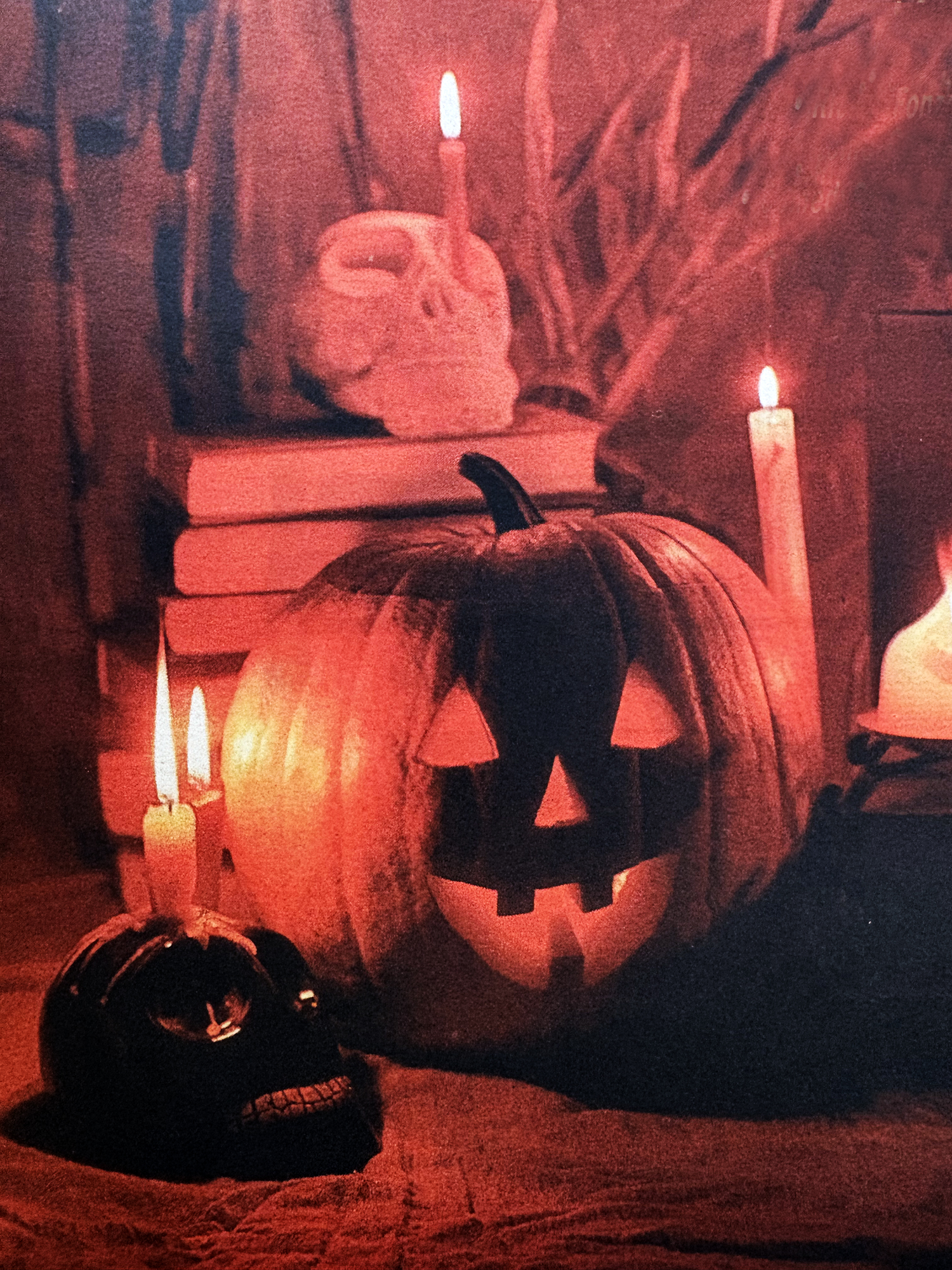
One of the most enduring features of Halloween, Jack O’Lanterns, is primarily an Irish tradition, although in the Old Country oversized rutabagas and turnips were used instead of pumpkins. By the late 1800s, Halloween had become a national observance in the United States characterized by games, costume parties, and particularly trick or treating, which stems from the old Irish custom of peasants going from door to door asking for money with which to buy luxuries for the feast.
During the 20th century, trick or treating became the most visible and popular aspect of Halloween for American youngsters. However, recent tragedies involving razor blades in apples and the distribution of poison candies has once again changed the face of this holiday celebration.
“Today, Halloween is turning back into an adult holiday,” says Dorothy Wardell, manager of La Femme Mystique, a costume shop off of Kirkwood Highway in Elsemere. “We are finding that more and more adults are celebrating it again. It’s a time when everyone can pretend to be something they are not,” she concludes. “And people just love it!”