So You Wanna Be a Rock ‘N’ Roll Star?
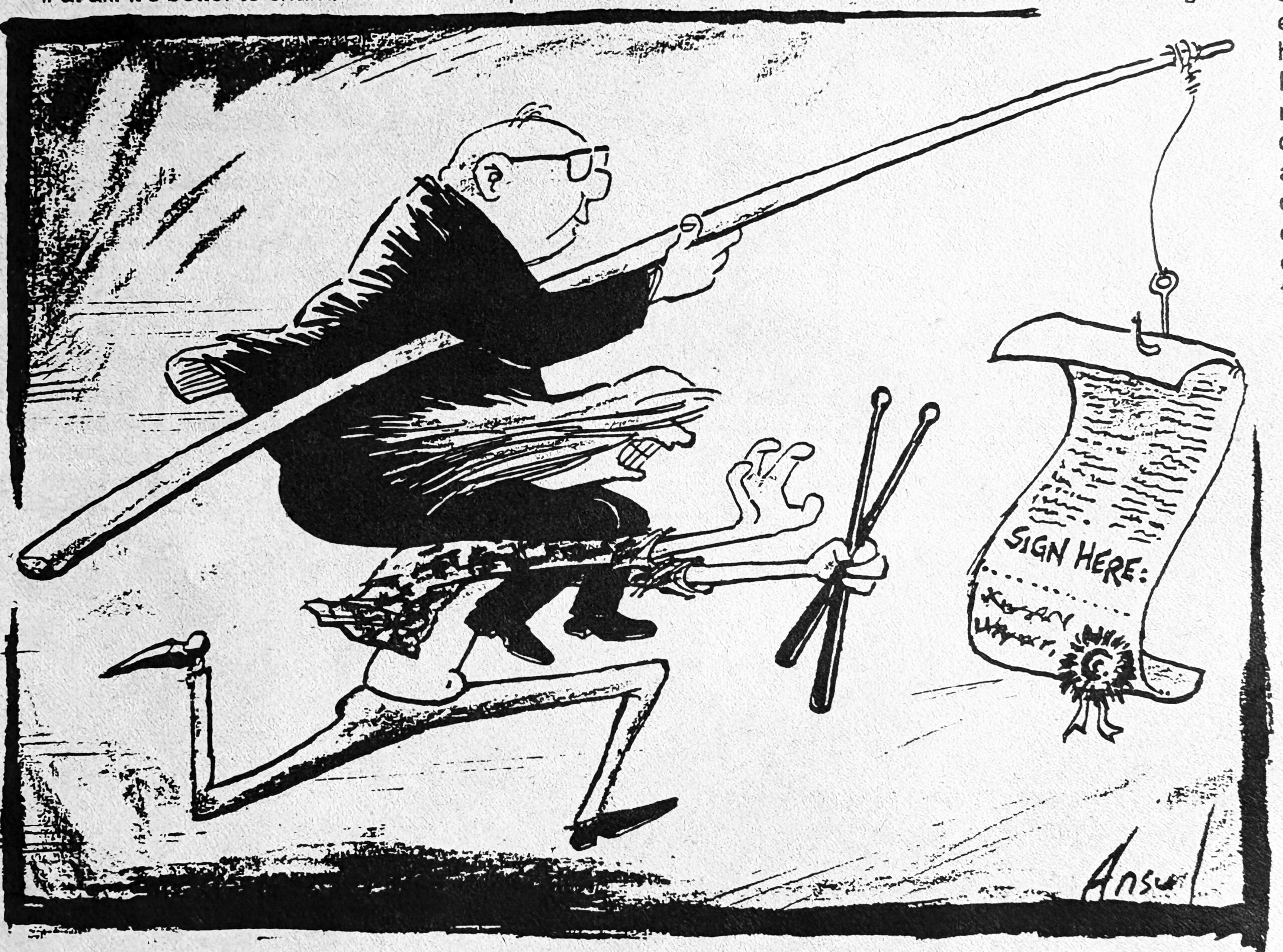
Some tips on what it really takes to “get signed”
By DAVID DEANS
Big Shout Magazine, November 1991
Area musicians constantly speak of landing the elusive deal — signing a substantial contract with a major record company.
You don’t have to be a musician or even related to one to know someone in a local band who brags about having the dubious and often-heard “interest from a major label.” And for every band that actually has had a brush with the Music Industry at some level, there are at least a dozen other band members who claim to be authorities on the subject of “getting signed.” But while many of these people may talk a good show, very few may actually understand the workings involved in acquiring such a deal.
Many local musicians and songwriters often follow a simplistic formula to attempt to advance their careers: playing bars, building a following, releasing a demo, and hopefully getting signed.
Subsequently, most face years of frustration while waiting for some record company mogul to discover them and save them from obscurity. In reality, the music industry is much more complex than most people realize.
Rarely will a record company sign a band merely because it has a decent following, good material, and a full slate of gigs. And with the problems this area has supporting the local original scene, musicians who opt to try to develop a successful career here need to approach the problem of getting signed in a much more comprehensive manner.
While there are plenty of talented bands and songwriters from this are who will never get anywhere because of their limited approach, there are also a number of less talented acts that have substantial deals because they understood the complexities of the industry and responded accordingly.
“TIMING IS EVERYTHING”
Timing is one of the most important factors in getting interest from the music industry — not the timing of whether the industry is ready for an act, but whether the act is ready for the industry. The biggest mistake an act can make is to send a hundred tapes of sub-standard material to A&R departments, and in effect, misrepresent themselves to the industry. An act must have excellent judgement about how developed it is and how much better it can become. Most artists believe in what they are doing at any given point in their careers; an objective judgement about when to approach the industry by be difficult to make. Consequently, it is crucial to make a positive and lasting first impression on the industry.
Steve Sharff, a manager at a major publishing company in New York emphasizes this point: “A lot of bands have sent me tapes that are terrible — I don’t mean the recording quality as much as the songs. It’s very east to tell when they are trying to be something they are not, instead of presenting an honest portrayal of who they really are.
“Well, I remember these bands when they follow up with their next recordings, and because of the volume of stuff I have to go through on an average day, in addition to working on present business, I am not likely to give it a thorough listen — if at all. It’s better to change the name of the act the second time around. And I’m not with a major label. A&R at the majors will rarely listen to unsolicited tapes, so if it is unsolicited, it better be great or they will never give you the time of day again.”
Sharff brings up an important point: Major labels rarely review material sent by an unsolicited act (without meaning to be pedantic, unsolicited in industry terms means without representation from a reputable industry source i.e. entertainment lawyer, manager, producer, etc.). So, it is usually a waste of band resources to send a hundred tapes to record companies since it is not likely that they will be reviewed. It is better to give tapes away to fans who would at least listen to them and perhaps turn others onto the music.
The industry is comprised of different levels and intertwining layers of thousands of people revolving around the core — A&R and marketing departments of the major labels (there are five majors, liberally speaking). These thousands of people all have more access and recognition within the core industry than just about any unsolicited act, so they tend to get attention more often. Thus, an unsolicited act is competing for the limited attention span of A&R people they don’t even know, against thousands of peripheral people who deal with A&R on a regular basis. Solicitation, therefore, is the answer to the difficult problem of getting industry recognition.
ENTERTAINMENT LAWYERS
Entertainment lawyers are probably the best people to review, represent, and solicit new material. An experienced entertainment lawyer will not only have a comprehensive understanding of the industry and music law, but he will also have a rolodex full of valuable contacts from A&R in majors and independents, to producers looking for new acts to develop.
While entertainment lawyers are incredibly busy and somewhat difficult to track down, they will give well-presented material a thorough examination. Because their fees tend to be much more than an unsigned act can usually handle, entertainment lawyers will normally work on a contingency basis, meaning their charges are contingent upon the results they deliver.
This arrangement is especially good for the act because it is in the best interest of the lawyer to land some sort of deal so he/she will get paid for the labor. However, no entertainment lawyer is going to work for free if he/she doesn’t believe the act has signing potential, and an effective entertainment lawyer’s time is so limited anyway that there is little time to take on new projects, much less acts that don’t seem promising.
No entertainment lawyer will solicit an act to the industry if that representation will have a bad reflection on him/her. This is actually a positive thing, because if an act can gain the support of an experienced entertainment lawyer, they essentially have an endorsement of their career, a sign that what they are doing has some chance of gaining substantial industry support (although this is not always the case).
Robin Mitchell-Joyce, an entertainment attorney from a firm in Nashville that represents ZZ Top among others, says that she gets about 30 tapes a week, with 30 acts from the previous week calling her to see what she thinks. This is on top of her already overloaded week of meetings and contractual work. “Believe me, I don’t call back if I don’t think the act is worthwhile,” she says. “I really have to love what they are doing to even talk to them at any length.”
While it seems that entertainment lawyers are as saturated with material as A&R reps, there is a significant advantage in getting the attention of an entertainment attorney instead of an A&R rep. Though an A&R rep may love an act, this rep is just one person in one company. No act is signed by a major merely on the basis of one A&R rep’s belief in them. And even if others in the company like the act and decide to offer a contract, it doesn’t mean that it’s the right company for the act: there is a profound difference in signing with a company that has 46 acts (Elektra) and a company that have more than 300 (MCA).
But an entertainment attorney knows which companies are signing, which have a strong history in the act’s musical genre, and which A&R reps will be more likely to want to work with the act. Thus the scope of an entertainment lawyer is much broader and significantly more powerful than an A&R rep’s.
Yet the problem of access to the industry remains: Which entertainment lawyers are appropriate to approach, and how will they distinguish one act from another in a pile of unopened promo packages? The entertainment lawyer is a busy and elusive species, and gaining access to their brief attention spans is an arduous task at best.
THE REFERRAL
The strongest appeal to an entertainment lawyer is one that is accompanied by a strong reference, especially from someone who has a good rapport with the lawyer. Ideally, this person should be a reputable industry source — a club owner, a booking agent, another artist already signed, a producer, or a music writer. The reference could also be the friend of a fan’s cousin who has an informal relationship with the lawyer.
Whoever the reference is, the addition of this person’s name (with consent) to a package, along with dropping that name during a preliminary phone call to the lawyer (or attorney’s assistant), will elevate the status of an act’s material and is more likely to gain attention than a package without a reference.
Another alternative is to send material for review to the writer of a music publication. Even if an article or product review is not published as a result, it is often worthwhile to call the writer ana bring the material to his/her attention. In extreme cases (when a writer is absolutely wild about someone’s product), he/she can give the artist a list of people to call and approval to use his/her name as a reference.
One appealing thing about using writers as references is they have no overt conflict of interest; they are usually not self-interested like core industry players. Since they usually have nothing to gain from directing an act to a lawyer or A&R rep, their referral is selfless and trustworthy. While it is unlikely that a writer for a national magazine will review an unsigned act’s material for print (because of editorial restrictions based on readership), he/she can be a great source of industry contacts.
Whether the reference comes from a music writer turned on by the act’s material, or from a club owner who recognizes the act’s potential for a larger market, the referral is the best way to gain the attention of an industry source — the core industry as well as the peripherals. Again, these people will not risk their reputations as judges of good music by referring an act that’s not ready or that will reflect poorly on them.
THE DEAL AND AFTER
Times are tougher than ever for acts signing deals. During the ’80s, record companies gave out huge contracts to new acts that had no proven commercial viability and allowed outrageous budgets for veteran artists whose time had passed (Billy Squier spent more than $800,000 recording his 1988 release and the album sold poorly).
When the recession hit, it hit the industry hard. The extravagant expenditures in the late ’80s left many companies in financial straits. In response to the changing economic climate, companies began streamlining — signing fewer acts and giving out less money for promotion and touring.
However, this is not entirely bad news. Instead of giving out huge deals, companies more frequently give out smaller development deals, which occur when a company gives a band anywhere from a few thousand to $30,000 to $40,00 to develop and record material. In return, the band is contractually bound to the company for a brief period of time.
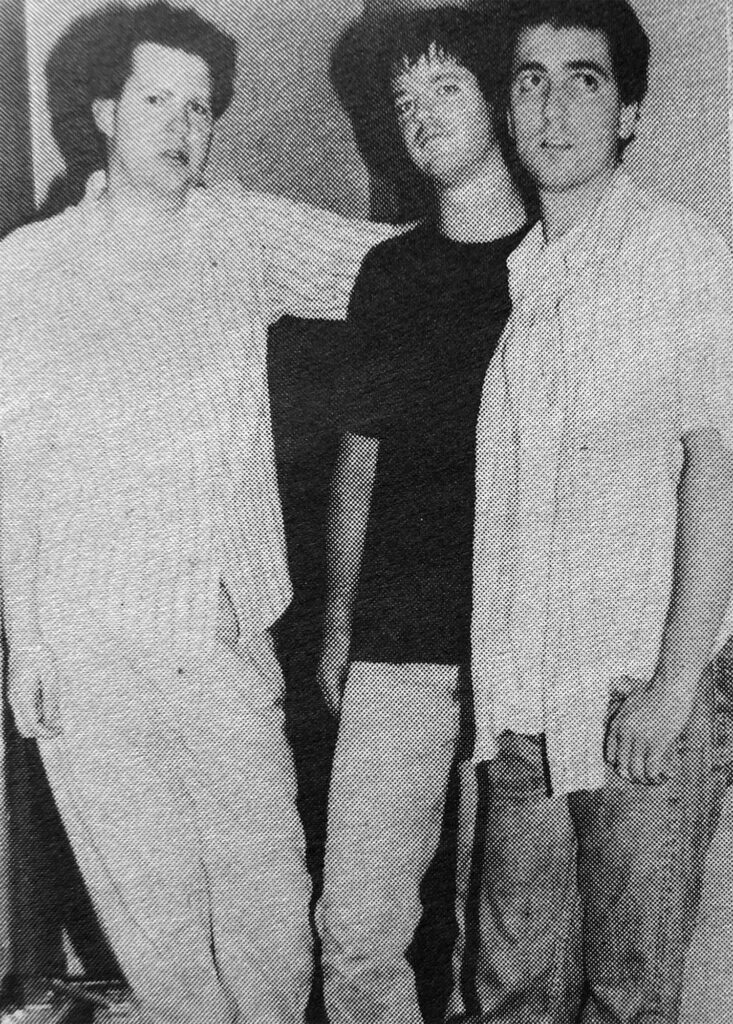
Philadelphia act Flight of Mavis, received $4,000 from A&M Records to record what became a four-song demo two years ago. This gave the company a chance to see whether or not they wanted to develop a long-term relationship with the act, and it gave the act a chance to record with no financial strain on them.
Flight of Mavis representative Neil Drucker explains the deal: “The band recorded four songs in Hoboken with a name producer (Gene Holder). The company then had 30 days to decide if they wanted to take it any further. They didn’t, and the band was free to use the recording to shop to other labels.”
What A&M offered was a development deal where they had the right of first refusal — for 30 days after Flight of Mavis finished in the studio, the company had the exclusive right to sign the band or not sign them. This sort of arrangement was beneficial for both parties. A&M had the opportunity to look closely at the band without the threat of another company signing them and with a relatively small investment, and after 30 days the band was free to shop their newly-recorded material to other companies. In this case, A&M opted not to sign, and by declining to take it further automatically released Flight of Mavis (and the $4,000 recording) to approach other companies.
A distribution deal is another valuable consideration for an unsigned act. There are many independent companies that sign and promote less-polished acts and alternative acts, some of which go on to signing substantial deals with major labels (Red Hot Chili Peppers recently signed a deal worth $5 million with Warner after years on an independent label).
While independents have a lot less money to develop and promote their acts, they will distribute records nationwide and sometimes worldwide, in addition to giving more personalized attention. The independents focus heavily on selling their acts to the college market, where there is a higher concentration of open-minded listeners.

Another valuable deal is the production and distribution (P&D) deal. Delaware industrial artist Spit landed a substantial P&D deal with Cargo Records recently.
“I signed a P&D deal with Cargo and one with NTS (a small independent label in Newark, DE).” Spit says. “NTS paid for the production of the records and tapes and distributed them internationally. Cargo picked up on it and offered to press and distribute them. The CDs are blowing the other sales out of the water. You’re much more likely to get a P&D deal if you already have product, though, especially CDs. Tapes and records just aren’t credible anymore.”
Distribution companies will pick up on a hot-selling record and try to get it distributed as widely as possible if they sense a profit. They might even pay for the production of a second record if the first one sells well. Eventually, larger companies may want to get a piece of the action and offer a healthy deal that includes heavy promotion as well as production and distribution. This approach involves several steps that may take years to evolve into a meaningful deal, but it also gives the artis much more leverage when it comes to negotiating with the majors.
WHILE YOU’RE WAITING
Patience will preserve the sanity of an unsigned act more than anything. Contacts take time to develop, and they need even more time to adequately review new material. Expecting quick responses and easy deals is unrealistic and delusionary. The fact is that most acts never get beyond the local or regional level, so expectations should be low from the beginning.
While waiting for responses and advancement in the music industry, unsigned acts should follow the usual simplistic formula: gig, record demos, and develop a following. But don’t expect to get signed merely on the basis of that formula. The music industry is too complex to approach it so narrowly and incompletely.
And remember, it’s a crap shoot no matter how you look at it. You can follow the above guidelines to the letter and still wind up writing songs in your basement, overlooked by the industry. And on the other hand, you could ignore the rules altogether, get a lucky break, and become the next MTV icon du jour. Nobody said it was a fair business.